

- Home
- Resource Listing
- Credentials, not codes: how the Indyme Value Exchange works at the door
Credentials, not codes: how the Indyme Value Exchange works at the door
Indyme
Freedom GO is not a smarter lock. It is an identity exchange that makes access faster for honest shoppers and harder for everyone else.
Last week we looked at why the restroom and the fitting room are the least managed doors in a store. The root cause is simple: the door has no identity. This week, we look at what happens when it gets one.
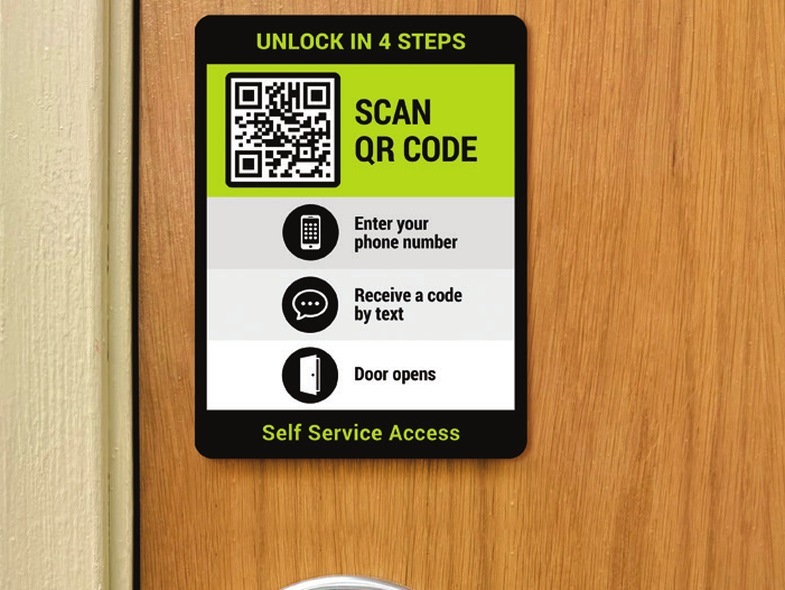
A credential replaces the code.
How it works
Freedom GO is a connected, self-service unlock solution for retail restrooms and fitting rooms. The shopper experience takes seconds:
-
The shopper scans a QR code near the lock with their phone camera.
-
The phone browser opens the Freedom web app. There is nothing to download.
-
A first-time shopper enters a phone or loyalty number and confirms a one-time code sent by text. The door unlocks.
-
A returning shopper on the same phone is recognized and unlocks with zero input.
Every session is logged in Indyme Cloud: the credential, the entry time, and, for single-user spaces, how long the visit lasted.
Why a credential changes everything
This is the Indyme Value Exchange applied to the door. The shopper offers a lightweight credential in exchange for instant, self-service access. That one exchange does four things:
-
It removes anonymity. Entering means providing identifying information, and credentials on a ban list are refused at every connected door.
-
It deters without confrontation. People intent on misuse tend to self-select out before they reach the door. No associate has to say no.
-
It creates a record. Every visit leaves a session log that no keypad can produce.
-
It frees associates. Honest shoppers let themselves in, and associates get back to the sales floor.
It also puts the LPRC’s See-Get-Fear model to work at the point of entry: shoppers see the deterrent, get that behavior carries consequences, and understand they can be identified.
Why codes fall short
A code is shared by design. Once it is on a receipt, a sticky note, or a group chat, it opens the door for anyone, and it never tells you who came in. A credential is personal, revocable, and logged.
We are candid about what that means for stores that already use pin-code locks. In our field research, swapping a keypad for Freedom GO did not consistently reduce incidents further at those stores. The case at a coded door is operational and analytical: associates stop handing out codes, the store gains session data it never had, and a known offender can be banned by credential instead of hoping the code has not spread.
Built for every shopper, and private by design
-
Assistance is a first-class path. Any shopper who prefers not to share a number, or does not have a smartphone, can call an associate with one tap.
- Opt-in, always. The privacy framework was developed with The Future of Privacy Forum. Phone numbers are used only for access, and shoppers can opt out at any time.
-
No camera, no biometrics. Freedom GO has no camera at the door and uses no facial recognition or biometric processing. Indyme acts as data processor and the retailer as controller, with a 13-month default retention window.
Same mechanism, two kinds of door
Restrooms and fitting rooms are co-equal applications. A single-stall restroom or individual fitting room uses a lock with an inside privacy button. A multi-stall restroom or fitting room cluster uses one entrance lock without one. The exchange at the door is the same.
Indyme