

- Home
- Resource Listing
- The most unmanaged door in your store
The most unmanaged door in your store
Indyme
Restrooms and fitting rooms are where incidents hide, labor leaks, and nobody knows who went in.
Every store has a door that nobody is watching. It sits at the back of the sales floor or at the end of the fitting room hallway, and it opens for almost anyone who asks. Behind it, the store loses in three ways at once: incidents, associate time, and the customer experience.
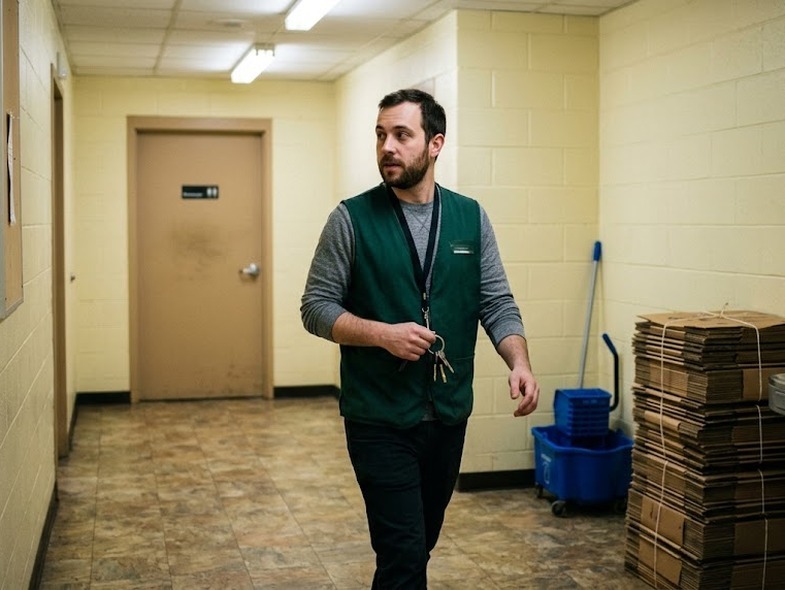
Every restroom request pulls an associate off the floor.
What happens behind the door
When the Loss Prevention Research Council (LPRC) surveyed its retail members about restroom problems in 2024, antisocial behavior dominated the responses, accounting for 79% of mentions. Drug use and overdose appeared in 23.3% of mentions. Shoplifting and tag removal appeared in 11%, alongside graffiti, vandalism, and medical emergencies.
The broader trend points the same way. Retailers surveyed by the NRF and LPRC reported an 18% increase in shoplifting incidents in 2024 compared with 2023, and a 17% increase in threats or acts of violence during theft events.
Fitting rooms carry a narrower version of the same problem. The primary risk there is shoplifting: tag removal, concealment, and sweeps. Retailers handle it in very different ways. Some lock every room, some staff an attendant, and some leave the area largely unmonitored.
One incident every eight store-days
In a joint field study with the LPRC across five retail stores, store teams completed daily restroom condition surveys before Freedom GO was installed. Across that baseline, 12.7% of observation days had an incident, roughly one in every eight store-days. Theft was the most-reported category, and about one incident day in five involved more than one kind of problem at once, such as theft combined with smoking.
The timing is telling. Monday and Tuesday saw incidents on 19 to 20% of observation days, while weekends saw 7 to 8%. When foot traffic and staffing drop, the unwatched door becomes more attractive.
Why today's answers do not hold
The most common responses retailers report are a camera near the entrance, scheduled employee checks, informal walk-bys, and basic controlled access. Each helps a little. None changes the underlying dynamic: anyone can enter, anonymously, for any purpose.
-
Associate-mediated unlocking costs time. Every “can I use the restroom?” can mean a round trip of about three minutes, and an associate will open the door for anyone who asks.
-
Pin-code locks decay. Codes get shared, spread to known offenders, and say nothing about who actually went in.
-
Leaving the door open hands the space to whoever wants it.
Meanwhile, honest shoppers pay the price. They wait, search for help, or give up and leave.
The missing piece is identity
The restroom and the fitting room are not unmanaged because retailers do not care. They are unmanaged because the door has no identity layer. Nothing about who enters, how long they stay, or how often they return is known or measurable.
Next week, we will look at what changes when the door asks for a lightweight credential instead of a code, and why that one exchange makes access faster for honest shoppers and harder for everyone else.
Sources: LPRC, “Behind Closed Doors: Breaking down retail restroom crime problems” (Smith, 2025); NRF and LPRC, “The Impact of Retail Theft & Violence 2025”; joint Indyme-LPRC field study, five stores, November 2025 to April 2026.
Indyme